Ball Valve vs Gate Valve vs Globe Valve: Differences, Industrial Applications & Selection Guide
Industrial valves play a critical role in controlling, regulating, and isolating fluid flow across process systems. Among the most commonly specified valves are ball valves, gate valves, and globe valves, each engineered for a distinct operational purpose. Selecting the wrong valve type can lead to excessive pressure loss, leakage, inefficient flow control, increased maintenance costs, or even system failure. For EPC contractors, plant engineers, and industrial buyers, understanding what each valve does, how it works, the key differences, and how to select the right valve is essential.
A ball valve is best suited for quick and tight shut-off, a gate valve is desi
gned for full-bore isolation with minimal pressure drop, and a globe valve is preferred where accurate flow regulation is required. This detailed guide explains the differences between ball valve vs gate valve vs globe valve, compares their industrial uses, and provides a clear selection framework for applications such as oil & gas pipelines, power plants, water systems, and general industrial utilities.
Valve Selection Summary
Ball valves are best for fast, leak-tight shut-off, gate valves are ideal for full-bore isolation with minimal pressure drop, and globe valves are preferred for precise flow regulation and throttling in industrial piping systems.
Importance of Valve Selection in Industrial Systems
Valves are not just mechanical components; they directly impact process efficiency, safety, and operational reliability. In industrial piping systems, valves are expected to perform under varying pressure, temperature, and flow conditions while maintaining leak-tight performance.
Incorrect valve selection can result in:
- Excessive pressure drop affecting system performance
- Cavitation, vibration, or erosion damage
- Inaccurate flow control and process instability
- Increased downtime and maintenance costs
Understanding the functional role of ball, gate, and globe valves helps engineers align valve performance with process requirements.
Ball Valves: Design, Working Principle, and Industrial Applications
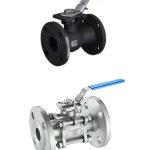
A ball valve uses a spherical ball with a central bore to control flow. The valve operates on a quarter-turn mechanism, making it one of the fastest and most reliable shut-off valves in industrial service.
How Ball Valves Work
When the handle or actuator rotates the ball 90 degrees, the bore either aligns with the pipeline (open position) or turns perpendicular to block flow completely (closed position). The ball seals against soft or metal seats to provide tight shut-off even at high pressure.
Industrial Applications of Ball Valves
- Oil & gas transmission and distribution pipelines
- High-pressure process lines
- Emergency shut-off and safety systems
- Chemical processing and utility services
Advantages of Ball Valves
- Bubble-tight shut-off capability
- Very low pressure drop when fully open
- Compact design and quick operation
- Ideal for automation and remote control
Limitations of Ball Valves
- Not suitable for precise throttling
- Seat wear in abrasive or slurry service
Gate Valves: Isolation Valves for Full-Bore Flow
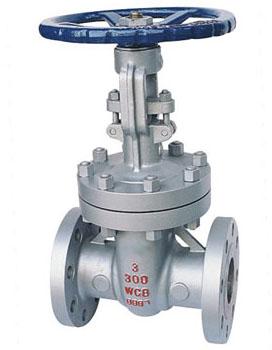
A gate valve is primarily an isolation valve designed to start or stop flow completely. It is not intended for flow regulation but excels in applications where minimal pressure loss is required.
How Gate Valves Work
Gate valves operate by lifting a gate vertically out of the flow path. When fully open, the valve offers straight-through flow with virtually no obstruction. When closed, the gate seats tightly to stop flow.
Industrial Applications of Gate Valves
- High-pressure and high-temperature pipelines
- Steam and utility services
- Water and wastewater treatment transmission and distribution systems
- Refinery and power plant isolation points
Advantages of Gate Valves
- Full-bore design with minimal pressure drop
- Suitable for high pressure and temperature
- Long service life in on/off applications
Limitations of Gate Valves
- Slow operation compared to ball valves
- Not suitable for throttling or frequent cycling
Globe Valves: Precision Control and Throttling Valves
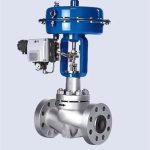
A globe valve is specifically designed for flow regulation. Its internal configuration allows precise control of flow rate and pressure, making it ideal for control and balancing applications.
How Globe Valves Work
The valve uses a movable plug and seat arrangement. As the plug moves closer to or farther from the seat, the flow path area changes, allowing accurate throttling and stable control.
Industrial Applications of Globe Valves
- Boiler feed water and steam systems
- Pressure and temperature control lines
- Fuel oil and chemical dosing systems
- Cooling and utility circuits
Advantages of Globe Valves
- Excellent throttling and control accuracy
- Stable performance under variable flow
- Reliable shut-off capability
Limitations of Globe Valves
- Higher pressure drop than ball or gate valves
- Larger size and higher operating torque
Ball Valve vs Gate Valve vs Globe Valve: Key Differences
Comparison Overview
| Parameter | Ball Valve | Gate Valve | Globe Valve |
| Primary Function | Shut-off | Isolation | Regulation |
| Operation | Quarter-turn | Multi-turn | Multi-turn |
| Pressure Drop | Very low | Minimal | Higher |
| Throttling Ability | Limited | Not recommended | Excellent |
| Automation | Easy | Moderate | Moderate |
For detailed specifications, see individual valve product pages below.
Application-Based Valve Selection
Oil and Gas Industry
- Ball valves are widely used for emergency shut-off and high-pressure pipelines
- Gate valves isolate long-distance transmission lines
- Globe valves control flow in processing and metering systems
Power Generation Plants
- Gate valves isolate main steam and feedwater lines
- Globe valves regulate boiler feed water and pressure
- Ball valves support auxiliary and bypass systems
Water and Industrial Utilities
- Gate valves provide isolation in distribution networks
- Ball valves allow quick shut-off
- Globe valves enable accurate flow balancing
How to Select the Right Valve for Your Application
Selecting the correct valve requires evaluating process conditions, operational needs, and maintenance expectations.
1. Define the Flow Function
- Isolation only: Ball valve or gate valve
- Flow regulation: Globe valve
2. Pressure and Temperature Conditions
High-pressure pipelines typically favor ball or gate valves with appropriate ASME class ratings.
3. Media Characteristics
Corrosive or abrasive media require compatible valve materials and trim design to prevent erosion and leakage.
4. Operation Frequency and Automation
Frequent operation favors ball valves due to quick actuation and reduced wear.
Common Mistakes in Valve Selection
- Using gate valves for throttling service
- Selecting oversized valves leading to poor control
- Ignoring pressure drop limitations
- Choosing incorrect materials for process media
Avoiding these mistakes improves safety, efficiency, and valve life cycle.
Frequently Asked Questions (FAQs)
Which valve is best for high-pressure pipelines?
Ball valves and gate valves are commonly used for high-pressure pipeline applications.
Globe valve vs ball valve for flow control – which is better?
Globe valves provide superior flow regulation and control accuracy.
Why should gate valves not be used for throttling?
Partial opening causes vibration, erosion, and seat damage.
Why Choose SVR Global – Industrial Valve Manufacturer in USA
SVR Global is a trusted industrial valve manufacturer in the USA, supplying ball, gate, and globe valves engineered for durability, safety, and international compliance. Our valves are widely used by EPC contractors and industrial operators for critical flow control applications.
Talk to Valve Experts
✔ Request a Quote
✔ Speak with Valve Expert
Contact SVR Global today to select the right industrial valve solution for reliable and efficient process performance.