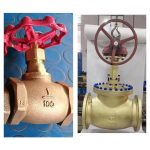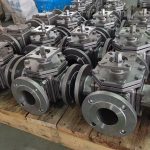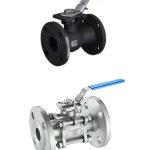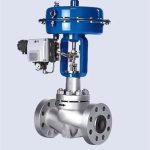
System dependability, efficiency, and maintenance planning all depend on choosing the proper valve material. For low to medium pressure systems, water, and mild chemical uses, bronze and brass valves are sometimes sought for. Although both are copper alloys, their different corrosion resistance, mechanical strength, temperature tolerance, and chemical compatibility define the best use. Knowing these differences helps procurement teams and engineers make wise judgments, therefore guaranteeing best performance, less downtime, consistent maintenance schedules, long service life, and safe system operation.
Precision-engineered bronze and brass valves from a Manufacturer in USA like SVR Global are designed to meet industrial standards, handle specified pressure and temperature ranges, and maintain compatibility with the intended media.
Why Valve Material Matters
Selecting the proper valve material transcends financial considerations. Reliability, safety, and efficiency of a system all depend on the material used. Unacceptable selection can cause:
- Premature corrosion or pitting decreases valve life.
- Pressure-induced leakage influencing process control
- Mechanical breakdown in systems prone to vibration or high-cycle motion
- Lower thermal and pressure resistance restricts operational flexibility.
Engineers can choose materials wisely that guarantee consistent system performance and lower maintenance needs by knowing how bronze and brass behave under varied pressure, temperature, and chemical conditions.
Key Differences Between Bronze and Brass Valves
Bronze and brass may look similar, but their composition and properties create distinct performance characteristics:
| Property | Bronze | Brass |
| Composition | Copper + Tin (and small alloying elements) | Copper + Zinc (may include lead for machinability) |
| Corrosion Resistance | Excellent in seawater, freshwater, and mild acids | Good in freshwater and general use, less resistant to seawater and acidic media |
| Strength & Hardness | Higher tensile strength; better wear resistance | Softer; easier to machine, moderate strength |
| Temperature Tolerance | –196°C to +260°C | –29°C to +200°C (depends on alloy) |
| Applications | Marine fittings, seawater pumps, HVAC chillers | Potable water, general plumbing, low-pressure HVAC lines |
| Standards | ASTM B62, ASME B16.34 | ASTM B16, ASME B16.18 |
Technical Considerations
When specifying bronze or brass valves, engineers must evaluate system parameters carefully:
- Pressure Class: Bronze valves typically rated PN 10–PN 25 / Class 125–250; brass valves PN 10–PN 16 / Class 125.
- Temperature Range: Bronze tolerates higher continuous temperatures and brief spikes better than brass.
- Media Compatibility: Bronze resists seawater and mild acids; brass performs well with potable water and non-aggressive fluids.
- Mechanical Strength: Bronze is better for high-cycle, vibration-prone systems; brass is suitable for lighter-duty service.
- Size Range: Both materials commonly available from DN 15–DN 200, depending on valve type.
Consider the actual operating conditions, including temperature fluctuations, media pH, and flow rates, rather than relying solely on material cost.
Common Valve Types
Bronze and brass valves are widely used in industrial, marine, and plumbing applications due to their corrosion resistance and durability. Selecting the appropriate valve type ensures efficient flow control, reliable isolation, and protection of pumps and other system components.
| Valve Type | Bronze Applications | Brass Applications |
| Ball Valves | Marine water circuits, pump isolation | Residential plumbing, HVAC, water meters |
| Gate Valves | Seawater intake, low-pressure steam lines | Potable water distribution, irrigation |
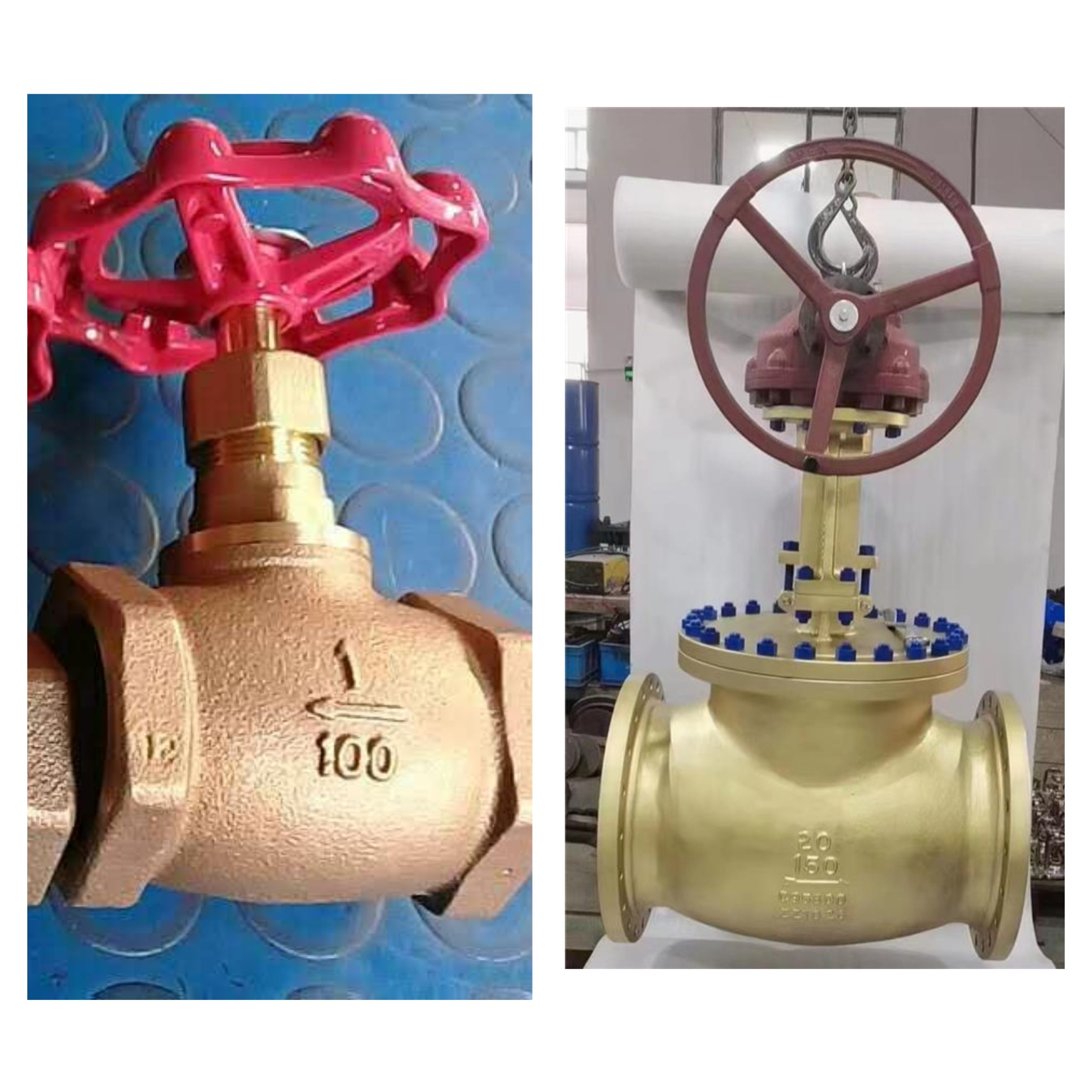
| Globe Valves | Chemical dosing, seawater control | Water treatment, HVAC flow control |
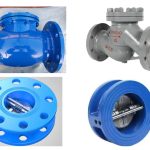
| Check Valves | Pump protection, marine discharge | Domestic water lines, low-pressure HVAC loops |
| Butterfly Valves | Seawater circulation, cooling loops | Low-pressure plumbing, irrigation systems |
| Plug Valves | Seawater systems, chemical pipelines | Irrigation systems, potable water distribution |
| Diaphragm Valves | Corrosive chemical feed, dosing lines | Treated water systems, HVAC chemical loops |
Advantages and Limitations
Choosing the appropriate material for particular system conditions depends on an awareness of the benefits and drawbacks of bronze and brass valves. Every substance has unique qualities that affect resilience, corrosion resistance, and appropriateness for several uses.
Bronze Valves:
Bronze valves great mechanical strength and corrosion resistance make them ideal for industrial systems with high-cycle, chemical, and marine applications as well as in chemical environments.
- Excellent resistance to corrosion in chemical dosing systems, somewhat acidic fluids, and seawater
- Stronger and more resistant to wear when used often or shaken.
- Performs well at elevated temperatures.
- Just a bit more expensive and difficult to machine
Brass Valves:
Perfect for potable water, residential plumbing, and low-pressure HVAC applications, brass valves are economical and simple to produce.
- Easy to manufacture and compatible with non-corrosive fluids
- Ideal for ordinary plumbing and drinkable water
- Lower mechanical strength; less appropriate for seawater, high-pressure, or high-temperature applications
- Restricted wear resistance when operating in high-cycle or vibration-prone mode
Industry-Based Applications
Bronze valves are mostly used because they are better than other materials at resisting seawater, they last longer, and they can withstand a lot of stress. Based on system needs, bronze and brass valves are chosen depending on operational requirements, strength, and corrosion resistance:
- Marine: Because of their superior resistance to pitting and galvanic corrosion, great durability, and performance in pump discharge and ballast lines, bronze valves rule in seawater systems. Perfect for cooling loops and shipboard piping.
- Plumbing & Potable Water: In both business and residential water networks, brass valves are frequently employed. They are perfect for distribution, meters, and irrigation pipes because they are easy to work with, follow the rules, and can handle medium pressure.
- Chemical Processing: Bronze is the material of choice for weak acids, salt water, and lines with a fair degree of corrosion in process lines. Brass is only appropriate for treated water and other non-corrosive liquids.
- Power Generation: Bronze valves are found in auxiliary systems needing corrosion resistance, cooling circuits, and condenser water lines.
- Water Treatment: The bronze and brass valves are used based on water chemistry, pressure, and flow circumstances.
Standards, Testing, and Selection Guidelines
Adherence to accepted standards and adequate verification help to guarantee valve dependability. Engineers and procurement teams ought to take operational circumstances and material suitability into account:
| Aspect | Bronze Valves | Brass Valves |
| Standards | ASTM B62, ASME B16.34, API 602 | ASTM B16, ASME B16.18 |
| Testing | Hydrostatic pressure, dimensional verification, leak testing | Hydrostatic pressure, dimensional verification, leak testing |
| Traceability | Material certificates, PMI (if required), batch testing | Material certificates, PMI (if required), batch testing |
Key Selection Considerations:
- Media Type: For saltwater, mild acids, or chemically corrosive liquids, use bronze. Choose brass for drinkable water and other non-corrosive liquids.
- Temperature & Pressure: Bronze works well in high temperatures, when pressure goes up suddenly, or in pipelines that need to hold a lot of pressure. For low-pressure uses and somewhat warm environments, brass is perfect.
- System Durability: For intermittent or light-duty use, brass is acceptable; bronze is advised for high-cycle or vibration-prone systems.
- Operational Environment: While brass valves are fit for indoor or sheltered water systems, bronze valves work dependably in maritime, coastal or somewhat acidic surroundings.
- Size and Flow Requirements: While bronze valves can handle somewhat bigger or higher-pressure applications because of their better strength, DN 15–DN 200 is accessible in most uses of either material.
Conclusion
Bronze and brass valves have their own uses depending on how they resist corrosion, how strong they are, and how much they cost. Choosing the right material calls for a thorough analysis of pressure, temperature, media compatibility, and projected operating cycles. SVR Global supports engineers and procurement teams in specifying the right valve for their system, ensuring optimal performance in marine, plumbing, and chemical systems.
By reviewing operating conditions and aligning valve material with actual system requirements, teams can achieve reliable, long-lasting valve performance across a variety of applications. Consulting with a Manufacturer in USA early in the design stage ensures that all specifications, standards, and testing requirements are fully met.