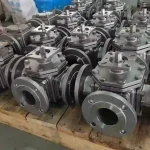
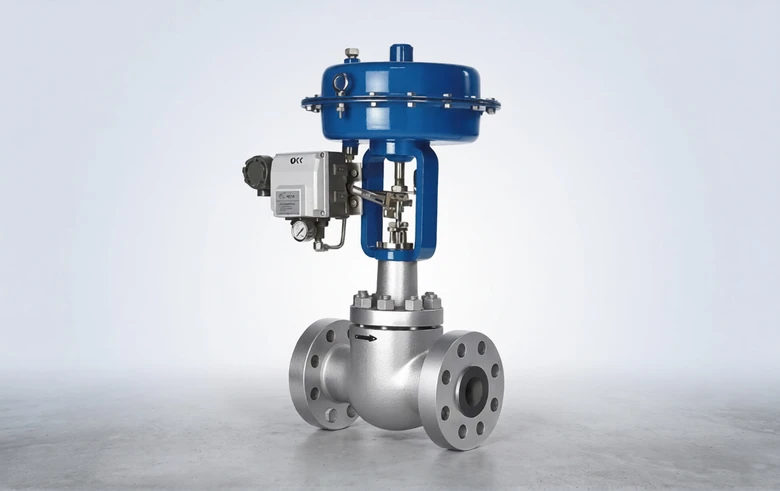
Steam control applications demand precision. Steam is compressible, grows swiftly with pressure drop, and reacts instantly to throttling adjustments, unlike liquid service. These features increase the difficulty in choosing control valves and reduce tolerance for mistakes in high-temperature industrial settings. A valve selected improperly might result in vibration in the pipeline, trim erosion, too much aerodynamic noise, and unstable control.
Choosing the best steam control valve for procurement teams and engineers calls for knowledge of pressure temperature connections, flow characteristics, material strength at high temperatures, velocity limits, and differential pressure behavior. With application insight from SVR Global and the engineering standards followed by a leading Manufacturer in USA, steam valve selection becomes a detailed technical evaluation rather than a simple dimensional decision.
Understanding Steam Behavior Under Throttling
Steam may be saturated or superheated, and both behave differently when passing through a control valve.
Typical industrial steam parameters include:
- Pressure range: 3 bar to 100+ bar
- Temperature range: 120°C to 540°C
- Recommended velocity: 25–35 m/s
- Maximum velocity (avoid exceeding): 40 m/s
When steam flows through a control valve, pressure drops across the trim. If the pressure drop reaches the critical pressure ratio, flow becomes choked. In choked flow, increasing valve opening no longer increases mass flow, and velocity approaches sonic conditions at the vena contracta.
This is where many selection errors occur. The valve must be sized using compressible flow equations in accordance with:
- ISA S75.01
- IEC 60534
Proper input data includes inlet pressure (P1), outlet pressure (P2), temperature, and required mass flow rate. Without accurate data, Cv sizing becomes unreliable.
Valve Type and Flow Characteristics
For steam applications, globe control valves remain the preferred design due to their stable throttling performance and precise flow modulation. Common configurations include:
- Single-seated globe valves for moderate pressure drops
- Cage-guided valves for improved stability and noise control
- Angle valves for high-pressure drop service
The selection of flow characteristic is equally important:
- Linear characteristic – suitable for consistent load conditions
- Equal percentage characteristic – ideal for varying steam demand
Equal percentage trim is commonly used in steam systems because process load often changes over a wide range. Rotary valves are generally avoided for continuous steam throttling, as seat integrity and control precision can degrade under high-temperature exposure.
Pressure Class and Body Design Considerations
Steam systems frequently operate at elevated pressures. The valve body must be selected according to system design pressure and applicable codes. Common pressure classes include:
- Class 150 for low-pressure utility steam
- Class 300 for medium service
- Class 600, 900, or 1500 for high-pressure process steam
Compliance should align with:
- ASME B16.34 for pressure-temperature ratings
- ANSI flange standards
- API 598 for pressure testing
Body design must account for thermal stress and expansion. Rapid temperature fluctuations can introduce mechanical strain if material strength is inadequate. Working with an experienced Manufacturer in USA ensures that body wall thickness, bolting, and casting integrity meet design code requirements for high-temperature service.
Material Selection at Elevated Temperatures
Steam temperature significantly influences material choice. Mechanical properties change as temperature rises, especially beyond 400°C.
| Steam Temperature | Recommended Body Material |
| Up to 425°C | ASTM A216 WCB |
| 425–540°C | ASTM A217 WC6 / WC9 |
| Above 540°C | High alloy steel (design dependent) |
Trim materials must resist erosion caused by high-velocity steam expansion. Common trim materials include:
- Hardened 410 stainless steel
- 17-4 PH stainless steel
- Stellite hard-facing for severe service
In superheated steam service, creep resistance becomes a primary consideration. Long-term exposure to high temperature can reduce material strength if not properly selected.
Superheated vs. Saturated Steam – Selection Impact
Not all steam behaves the same inside a control valve. The distinction between saturated and superheated steam directly affects material selection and trim design.
| Parameter | Saturated Steam | Superheated Steam |
| Temperature Behavior | Temperature directly linked to pressure (follows steam tables) | Temperature higher than saturation point at given pressure |
| Condensation Risk | Possible downstream condensation during pressure drop | No immediate condensation under normal operation |
| Trim Requirement | Requires erosion-resistant trim due to moisture potential | Requires heat-resistant trim for sustained high temperatures |
| Thermal Stress | Moderate thermal stress | Higher thermal stress on body and trim components |
| Packing Performance | Standard high-temperature packing sufficient | Accelerated packing degradation rate |
| Stem Behavior | Minimal expansion differential | Greater stem expansion differential due to high heat |
| Design Considerations | Moisture-tolerant materials and surface hardening | Bonnet extensions, alloy steel bodies, high-temperature packing systems |
Differential Pressure and Trim Design
Steam control valves often experience significant pressure drops. When differential pressure is high, energy is dissipated rapidly across the trim, increasing noise and velocity.
To manage this, engineers may specify:
- Multi-stage pressure reduction trim
- Low-noise cage designs
- Balanced plug configurations
Balanced trim helps reduce actuator thrust requirements, particularly in high-pressure service. It also stabilizes plug movement under fluctuating loads. Velocity control is critical. Excessive velocity accelerates wire drawing and seat erosion. Maintaining recommended limits ensures longer operational stability and smoother control response.
Actuation and Control Stability
Steam control valves are typically pneumatically actuated using diaphragm or piston actuators.
Important considerations include:
- Maximum differential pressure during shutoff
- Required thrust for tight closure
- Fail-open or fail-closed configuration
- Instrument air supply (3–6 bar typical)
Improper actuator sizing may prevent full seating under maximum pressure, resulting in leakage.
Control stability is also influenced by valve sizing. A valve operating consistently below 20% travel may experience unstable response. Ideally, normal operating range should fall between 40–70% travel for accurate modulation.
Conclusion
Choosing a steam control valve calls for knowledge of aerodynamic effects during throttling, pressure drop distribution, material performance at high temperature, and compressible flow behavior. Steam systems call for exact engineering since slight specification mistakes might fast turn into vibration, noise, and trim damage, less control stability, wear acceleration, sealing difficulties, and long-term operational dependability issues. Proper evaluation of operating conditions ensures consistent performance under fluctuating pressure and temperature loads.
Working with a technologically proficient Manufacturer in the USA such as SVR Global lets procurement and engineering teams pick steam control valves that are correctly sized, meet accepted criteria, and developed for challenging pressure and temperature conditions. Examining early in the selection process operational data and pressure temperature characteristics helps to enable more seamless commissioning and consistent long-term performance.