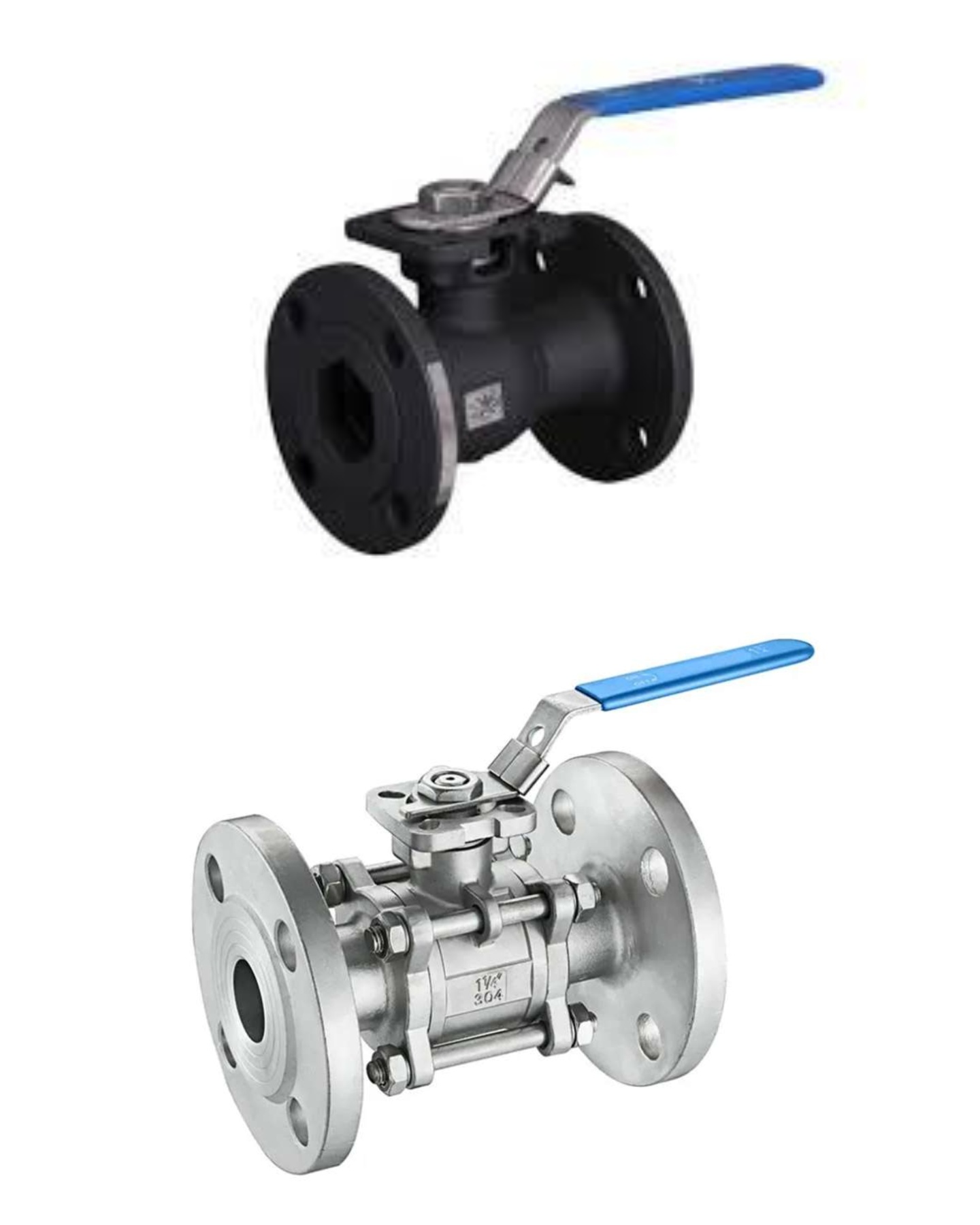
In industrial piping systems, material selection directly influences valve reliability, safety, and lifecycle performance. Stainless steel and carbon steel valves are among the most often chosen options to provide different operating conditions. Choosing the incorrect material could result in extra capital expense, strength loss at temperature, or corrosion damage. Understanding the technical variations is crucial for procurement teams and engineers before completing specifications.
SVR Global assists initiatives requiring careful material evaluation by means of manufacturing experience spanning oil and gas, power generation, chemical, and water sectors. As a trusted Manufacturer in USA, the focus is not only on supplying valves but on ensuring material compatibility with real operating environments.
Understanding the Core Material Difference
The main difference is the type of metal the alloy is made of. The kind and quantity of alloying elements specifically affect weldability, mechanical strength, temperature range, and corrosion resistance. Small changes in the amount of chromium, carbon, or molybdenum in a valve can have a big impact on how well it works when it’s hot, under pressure, or exposed to chemicals.
Carbon Steel
- Iron with carbon content typically up to 2%
- May include small amounts of manganese and silicon
- Limited inherent corrosion resistance
- Higher strength-to-cost ratio for non-corrosive services
Stainless Steel
- Minimum chromium content of 10.5%
- For corrosion resistance, chromium creates a passive oxide layer.
- May contain nitrogen, molybdenum, or nickel.
- Created for demanding and sanitary settings
While carbon steel depends on coatings, linings, or environmental control, stainless steel’s chromium level generates self-healing corrosion resistance.
Mechanical Strength and Temperature Performance
Material strength changes significantly with temperature. This directly impacts valve body design, pressure class rating, and wall thickness requirements.
| Property | Carbon Steel (WCB / A216) | Stainless Steel (CF8 / CF8M) |
| Temperature Range | –29°C to +425°C | –196°C to +540°C |
| Typical Pressure Ratings | Class 150–600 | Class 150–600 |
| Thermal Expansion | Moderate | Higher than carbon steel |
| High-Temp Oxidation Resistance | Moderate | Excellent |
| Low-Temp Impact Strength | Limited | Superior |
Key considerations:
- Under freezing settings, stainless steel does better.
- Carbon steel is commonly utilized in steam and hydrocarbon applications across middle temperature ranges.
- Alloyed stainless grades have greater creep resistance at temperatures over 450°C.
Corrosion Resistance Comparison
Corrosion is often the deciding factor.
Carbon Steel
Suitable for:
- Dry gas systems
- Non-corrosive hydrocarbons
- Fire protection lines
- Closed-loop heating systems
Requires:
- Protective coatings (epoxy, FBE)
- Cathodic protection in buried service
- Corrosion allowance in wall thickness design
Stainless Steel
Preferred for:
- Chemical processing
- Marine environments
- Acidic or chloride-rich media
Molybdenum addition helps grades such as CF8M (316 stainless steel) to be more resistant to chlorides. For media having chlorides over 200 ppm, stainless steel greatly lowers pitting risk in contrast to carbon steel.
Pressure, Flow, and Fabrication Considerations: Carbon Steel vs Stainless Steel
| Aspect | Carbon Steel | Stainless Steel |
| Hydraulic Performance | Performs reliably when sized to the same pressure class and bore | Performs reliably when sized to the same pressure class and bore |
| Size Range | DN 15 – DN 1200 | DN 15 – DN 1200 |
| Pressure Classes | PN 10–PN 100 / Class 150–600 | PN 10–PN 100 / Class 150–600 |
| Design Standards | ASME B16.34, API 600, API 602, API 609 | ASME B16.34, API 600, API 602, API 609 |
| Flow / Pressure Drop / Closure | No significant effect | No significant effect |
| Bolting Compatibility | Standard | May require corrosion-resistant bolting |
| Gasket Selection | Standard | May require high-temperature or chemical-resistant gaskets |
| Thermal Stress Behavior | Moderate | Higher thermal expansion; must be considered |
| Welding / Fabrication | Easier weldability; lower cost; simpler preheat/post-weld | Requires controlled welding; prevents carbide precipitation; proper filler metal; stricter inspection |
Common Standards and Material Grades
Selecting the suitable valve material requires adherence to recognized international criteria to ensure dependability, safety, and performance under operational conditions. There are strict material and testing standards for carbon steel and stainless steel valves. These standards make sure that the valves are strong, don’t rust, and can handle high pressure.
Carbon Steel Grades:
- ASTM A216 WCB
- ASTM A105 (for forged valves)
- ASTM A352 LCB (low temperature)
Stainless Steel Grades:
- ASTM A351 CF8 (304)
- ASTM A351 CF8M (316)
- ASTM A182 F316 (for forged valves)
Testing typically includes:
- Hydrostatic pressure testing (API 598)
- Material traceability per EN 10204 3.1
- PMI (Positive Material Identification) when required
Material Selection Guidance: Carbon Steel vs Stainless Steel
| Criteria | Carbon Steel | Stainless Steel |
| Corrosion Resistance | Suitable for non-corrosive media | Required for corrosive media, chlorides, acids |
| Budget Consideration | Ideal when cost is critical | Higher initial cost justified by long-term reliability |
| Temperature Range | –29°C to +425°C | Cryogenic to high-temperature service (–196°C to +540°C) |
| Protective Measures | Coatings acceptable | Inherent corrosion resistance; coatings usually not needed |
| Maintenance Access | Suitable when maintenance is available | Long-term reliability reduces maintenance frequency |
| Special Applications | General industrial and utility lines | Hygiene-critical, chemical, marine, or aggressive services |
Industry-Based Selection Guidance
Oil & Gas
- Carbon steel: upstream pipelines, dry hydrocarbons
- Stainless steel: sour service, offshore platforms
Power Plants
- Carbon steel: steam distribution within temperature limits
- Stainless steel: superheated steam sections, high-temperature zones
Chemical Processing
- Stainless steel typically preferred
- Carbon steel only where corrosion rates are controlled
Water Treatment
- Carbon steel with coatings for bulk water lines
- Stainless steel for aggressive or treated water sections
Material selection must always consider measurable corrosion rate (mm/year), chloride content, temperature, and operating pressure.
Conclusion
The choice of stainless steel valves against carbon steel valves goes beyond cost or strength. It demands study of expected service life, pressure class, temperature range, corrosion rate, and fluid chemistry. Selecting the wrong materials could result in early failure, leakage, or disintegration under pressure. Engineers should also consider how erosion and temperature changes will impact valve components over time. Choosing the best material ensures consistent performance, lowers maintenance, and raises overall plant safety.
Partnering with a knowledgeable Manufacturer in USA ensures that valve materials meet project specifications, comply with industry standards, and perform reliably under actual operating conditions. At SVR Global, engineers and procurement teams receive guidance to match material selection with real process data rather than relying on assumptions.