Floating Ball Valve Manufacturer in USA
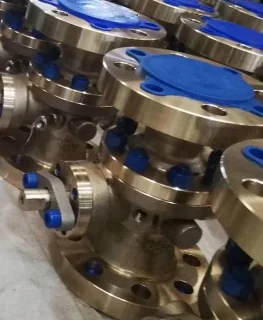
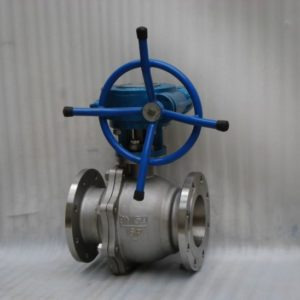
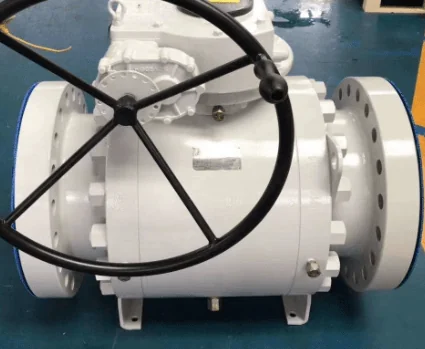
SVR Global is the top Floating ball valve manufacturer in USA. Our valves are a well-liked option in Texas, Ohio, and New Jersey’s power generating, chemical, and oil and gas industries. A quarter-turn valve known as a floating ball valve controls fluid flow by using a disk with a ball-like form. It is known as a “floating” ball valve because the ball can move freely while the valve opens and closes because it is not held in place but rather floats between two or more seats. Forging material was used to create this valve. Compared to other materials, forging material has greater strength when used at high temperatures and pressure. Additionally, they are very resistant to fatigue cracking. This kind of valve controls the flow of liquids or gases through a rotating, drag-producing ball. Even if the valve isn’t used for a long time, they have a remarkably long lifespan and continue to function at their best. These valves are easier to use and are opened by spinning the lever handle in a clockwise direction and closed by doing the opposite.
Parts:
Body: The body of the valve is the outer shell that encases the internal components of the valve.
Ball: The ball is the internal component that controls the flow of fluid through the valve. It is typically made of metal or a hard material and is designed to float in the fluid.
Seat: The seat is the part of the valve that the ball comes into contact with when the valve is closed. It is typically made of a soft material like rubber or Teflon to prevent damage to the ball.
Stem: The stem is the component that connects the handle or actuator to the ball. It is responsible for rotating the ball within the valve body to control the flow of fluid.
Handle or actuator: The handle or actuator is the part of the valve that the operator uses to control the flow of fluid. It can be a simple lever or wheel, or it can be an automated device that uses electrical or pneumatic power to control the valve.
Seals: The valve has a series of seals that prevent fluid from leaking out of the valve body. These seals are typically made of rubber or Teflon and are located between the ball, seat, and stem.
Bearings: The valve has bearings that support the ball and allow it to rotate freely within the valve body.
Industries:
Chemical Industry
Petrochemical Industry
Power Industry
Oil and gas Industry
Mining Industry
Marine Industry
Gas Supply and Water Supply Industry
Construction industry
Advantages:
Excellent sealing: Floating ball valves use soft seals that create a tight seal between the ball and the valve body, preventing leaks and minimizing the risk of product contamination.
High flow capacity: The streamlined design of the ball in a floating ball valve allows for a high flow capacity, making it suitable for applications where high flow rates are required.
Versatility: Floating ball valves can be used with a wide range of fluids, including corrosive and abrasive fluids, as well as gases and liquids.
Low operating torque: Floating ball valves require relatively low operating torque, making them easy to operate manually or with automated actuators.
Easy maintenance: The simple design of floating ball valves makes them easy to maintain and repair, minimizing downtime and reducing maintenance costs.
Long service life: Floating ball valves are durable and long-lasting, making them a cost-effective choice for many industrial applications
Applications:
Widely used in the oil and gas industry to control the flow of crude oil, natural gas, and other fluids through pipelines and processing facilities.
Used to control the flow of chemicals through pipelines in chemical processing plants.
Used in water treatment plants to control the flow of water through various stages of the treatment process.
Used in power plants to control the flow of steam, water, and other fluids through turbines and other equipment.
SVR Global is the certified Floating ball valve manufacturer in USA and its valves have the following technical details
Materials: cast Iron, SS316, SS304, F22, F51, LF2, F304, F304L, F316, F316L, cast steel (WCB, WCC, WC6, WC9)
Class: 150 to 2500
Ends: flanged, socket weld, butt weld, threaded
Size: 1/4’’ to 48’’
Pressure: PN 10 – PN 450
Operation: lever operated, gear operated, electric actuated, pneumatic actuated