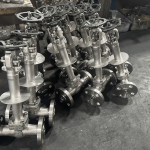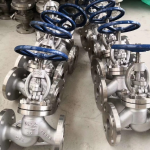
Cryogenic systems function in some of the most severe industrial environments on earth. With temperatures dropping to –196°C (–320°F) in LNG and liquid nitrogen applications, even small weaknesses in material selection or valve design can result in brittle fracture, leakage, or catastrophic system failure. For this reason, cryogenic valve standards and design requirements are significantly more stringent than those applied to conventional industrial valves. Companies such as SVR Global, a manufacturer in USA, engineer cryogenic valves in accordance with internationally recognized compliance and performance guidelines to ensure reliability under ultra-low-temperature conditions.
Across industries including LNG processing, petrochemicals, industrial gas production, and aerospace systems, cryogenic valves must conform to strict international standards and engineering protocols to guarantee safety, structural integrity, and consistent performance. In this blog, we will examine the key standards, fundamental design principles, material specifications, and testing requirements that define cryogenic valve reliability.
Why Special Standards Are Required for Cryogenic Valves
At extremely low temperatures, materials behave differently. Metals can lose ductility and become brittle. Sealing components may shrink. Thermal contraction can create stress in valve bodies and stems.
To address these challenges, cryogenic valve design standards focus on:
- Material toughness at low temperatures
- Leak-proof sealing performance
- Structural integrity under thermal stress
- Fire safety compliance
- Operational reliability in extreme environments
Without adherence to these standards, valves may fail during service, risking both safety and operational continuity.
Major Cryogenic Valve Standards
1. BS 6364 – Specification for Valves for Cryogenic Service
BS 6364 is one of the most recognized standards for cryogenic valve testing and performance. It outlines requirements for:
- Low-temperature type testing
- Extended bonnet construction
- Leak testing procedures
- Material performance validation
Valves tested under BS 6364 must demonstrate functionality at extremely low temperatures, typically down to –196°C.
2. API 6D – Pipeline Valves
API 6D is widely applied in LNG and cryogenic pipeline systems. While not exclusively a cryogenic standard, it includes performance requirements for:
- Pressure testing
- Structural integrity
- Design verification
When used for cryogenic applications, additional low-temperature testing is required.
3. API 598 – Valve Inspection and Testing
API 598 defines inspection and pressure testing requirements for industrial valves, including those used in cryogenic environments. It covers:
- Shell pressure testing
- Seat leakage testing
- Visual inspection criteria
For cryogenic service, these tests are often combined with low-temperature performance validation.
4. ASME B16 Series Standards
ASME standards define pressure-temperature ratings, face-to-face dimensions, and flanged connections. Important standards include:
- ASME B16.34 (pressure-temperature ratings)
- ASME B16.5 (flanges and fittings)
Cryogenic valves must meet these dimensional and pressure rating requirements in addition to low-temperature specifications.
5. ISO 28921 – Cryogenic Valves Testing
ISO 28921 specifically addresses cryogenic valve testing procedures. It ensures that valves can:
- Withstand low temperatures
- Maintain sealing capability
- Operate smoothly after thermal exposure
This standard supports global consistency in cryogenic valve quality.
Key Design Requirements for Cryogenic Valves
Meeting standards is only part of the equation. Proper engineering design is equally critical.
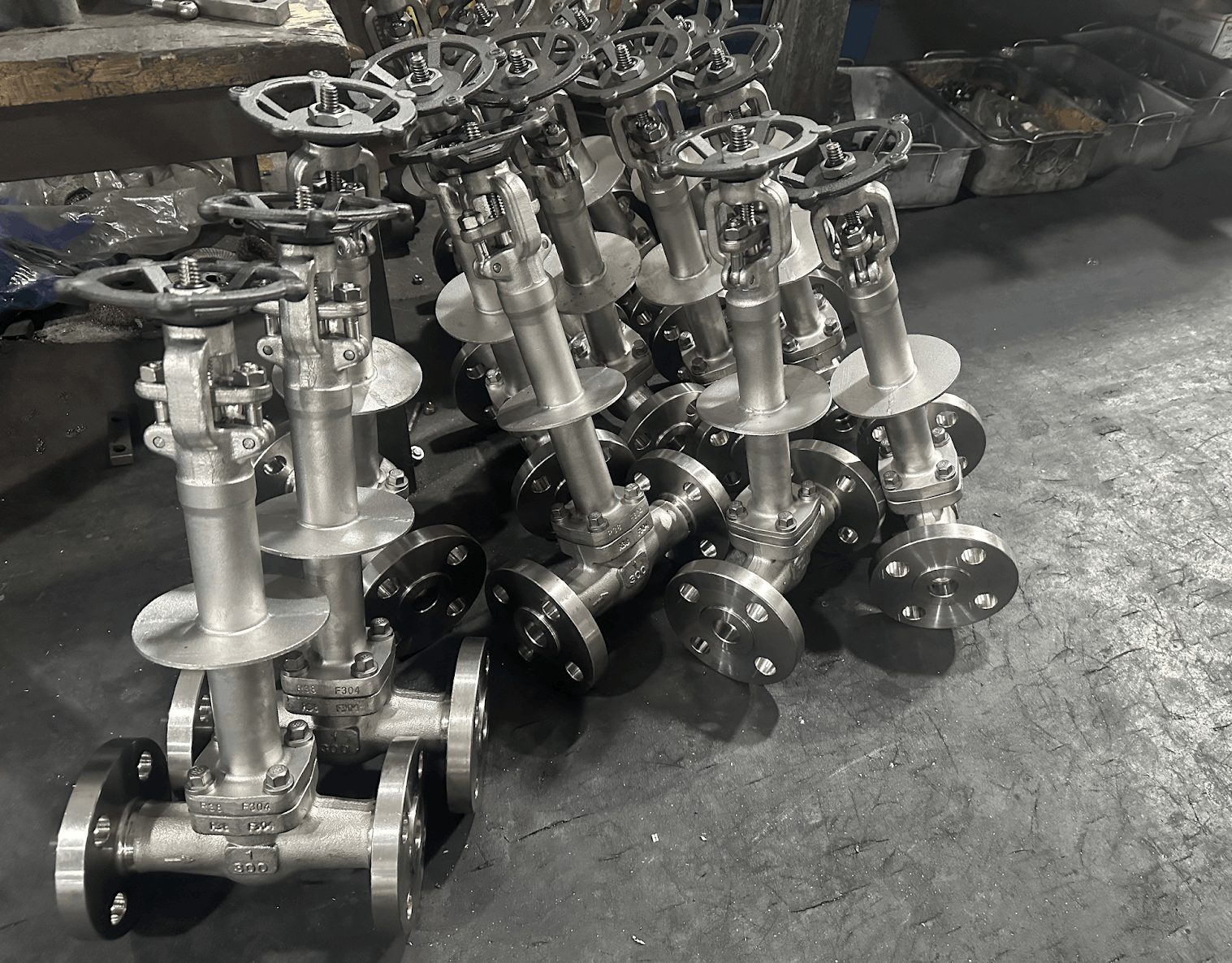
1. Extended Bonnet Construction
One of the most important cryogenic valve design features is the extended bonnet.
Purpose:
- Keeps stem packing away from extreme cold
- Reduces heat transfer to sealing components
- Prevents leakage due to material contraction
Extended bonnets are mandatory in most LNG and low-temperature applications.
2. Material Selection for Low Temperatures
Cryogenic valves require materials that maintain toughness and ductility at sub-zero temperatures.
Common materials include:
- Austenitic stainless steel (SS304, SS316)
- Low-temperature carbon steel (LTCS)
- Duplex stainless steel
- Nickel alloys
Carbon steels not rated for low temperatures can crack or fracture under cryogenic conditions.
3. Thermal Contraction Considerations
All materials contract at low temperatures. Designers must account for:
- Differential expansion between components
- Stem movement
- Body-seat alignment
Failure to consider thermal contraction can result in seat misalignment and leakage.
4. Tight Shut-Off Performance
Cryogenic systems handle volatile and often flammable media like LNG or liquid hydrogen.
Valves must provide:
- Bubble-tight sealing
- Low fugitive emissions
- Reliable seat performance
Metal-seated or specially engineered soft-seated configurations are commonly used.
5. Fire-Safe Design
In LNG and gas applications, fire safety compliance is critical.
Cryogenic valves often meet:
- API 607 (fire testing for quarter-turn valves)
- API 6FA (fire test for pipeline valves)
Fire-safe design prevents catastrophic leakage during external fire exposure.
Testing Requirements for Cryogenic Valves
Cryogenic valve testing goes beyond standard pressure tests.
1. Cryogenic Type Testing
Valves are submerged in cryogenic fluids (often liquid nitrogen) to simulate actual operating conditions. Testing evaluates:
- Seat leakage at low temperatures
- Operational torque
- Structural integrity
2. Pressure Testing
Includes:
- Hydrostatic shell test
- Seat leakage test
- High-pressure gas testing
These tests confirm structural and sealing performance.
3. Fugitive Emission Testing
Valves may undergo emission testing to ensure minimal leakage of hazardous gases.
Applications That Demand Strict Cryogenic Standards
Cryogenic valve standards are essential in:
- LNG liquefaction plants
- LNG storage and transfer systems
- Industrial gas production
- Air separation units
- Hydrogen processing facilities
- Aerospace fuel systems
Each of these industries depends on strict compliance with low-temperature design guidelines.
Common Design Challenges in Cryogenic Valves
- Material brittleness
- Stem seal shrinkage
- Ice formation around external parts
- Pressure fluctuations
- Rapid temperature cycling
Addressing these challenges requires advanced engineering and compliance with international cryogenic standards.
The Importance of Manufacturer Expertise
Producing cryogenic valves requires advanced engineering, precision machining, and strict quality control. SVR Global designs and manufactures cryogenic valves that comply with international standards, ensuring dependable performance in LNG and low-temperature applications. By focusing on material integrity, extended bonnet construction, and rigorous cryogenic testing, the company supports industries that operate in extreme environments.
Conclusion
Cryogenic valve standards and design requirements are essential for maintaining safety, performance, and durability in ultra-low-temperature environments. From BS 6364 and ISO 28921 to API and ASME standards, these guidelines ensure that valves operate effectively in LNG plants, industrial gas facilities, and other cryogenic systems.
Extended bonnet construction, low-temperature material selection, fire-safe compliance, and rigorous cryogenic testing form the backbone of dependable valve performance. Without strict adherence to these standards, operational risks increase significantly.
As cryogenic applications continue to expand globally especially in LNG and hydrogen sectors selecting valves that comply with recognized standards is critical. Careful evaluation of specifications, materials, and testing procedures helps guarantee long-term system integrity and safe operation in even the most demanding low-temperature environments.